
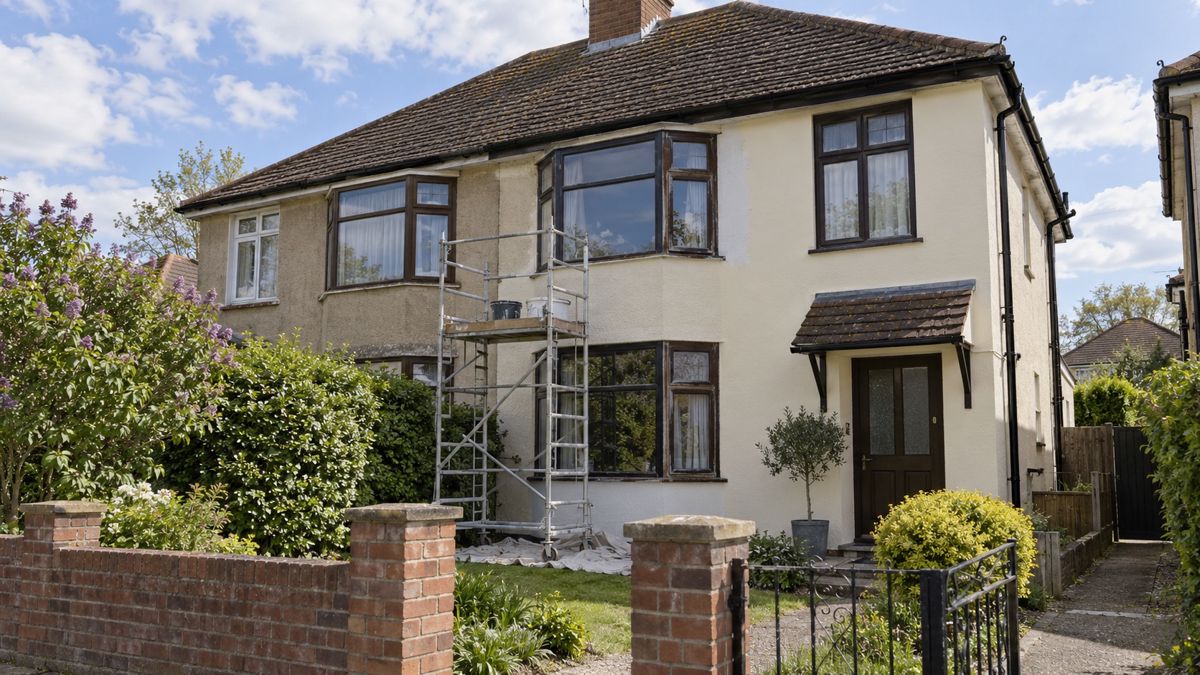
Most homeowners in Swindon pay somewhere between about £1,500 and £6,000 to have the outside of a house painted, depending on size, condition and access. A small terraced house with simple woodwork sits at the lower end. A large detached house with scaffolding and a lot of repairs sits at the top, or above it. Those figures are rough guides based on widely quoted UK market ranges. They are not quotes from this business, and your own price could fall outside them.
What is a typical cost to paint a house exterior in Swindon?
As a broad guide across the UK, which Swindon broadly follows, exterior painting for a typical house often looks like this:
- Terraced or small house: roughly £1,000 to £2,500 for walls and woodwork.
- Three-bed semi-detached: roughly £1,500 to £3,500.
- Larger detached house: roughly £3,000 to £6,000 or more.
- Woodwork only (windows, doors, fascias, soffits): often from several hundred pounds to around £1,500, depending on how much there is.
Those ranges usually assume reasonable access and surfaces that only need normal preparation. They can change quickly if the walls need repair or scaffolding is required. Prices also move with labour and material costs, so treat any article, including this one, as a starting point and not a price list.
What makes the price go up or down?
Two houses that look the same from the road can be priced very differently. The main drivers are these.
- Size and height. More wall area means more paint and more hours. A third storey or tall gable end adds access costs.
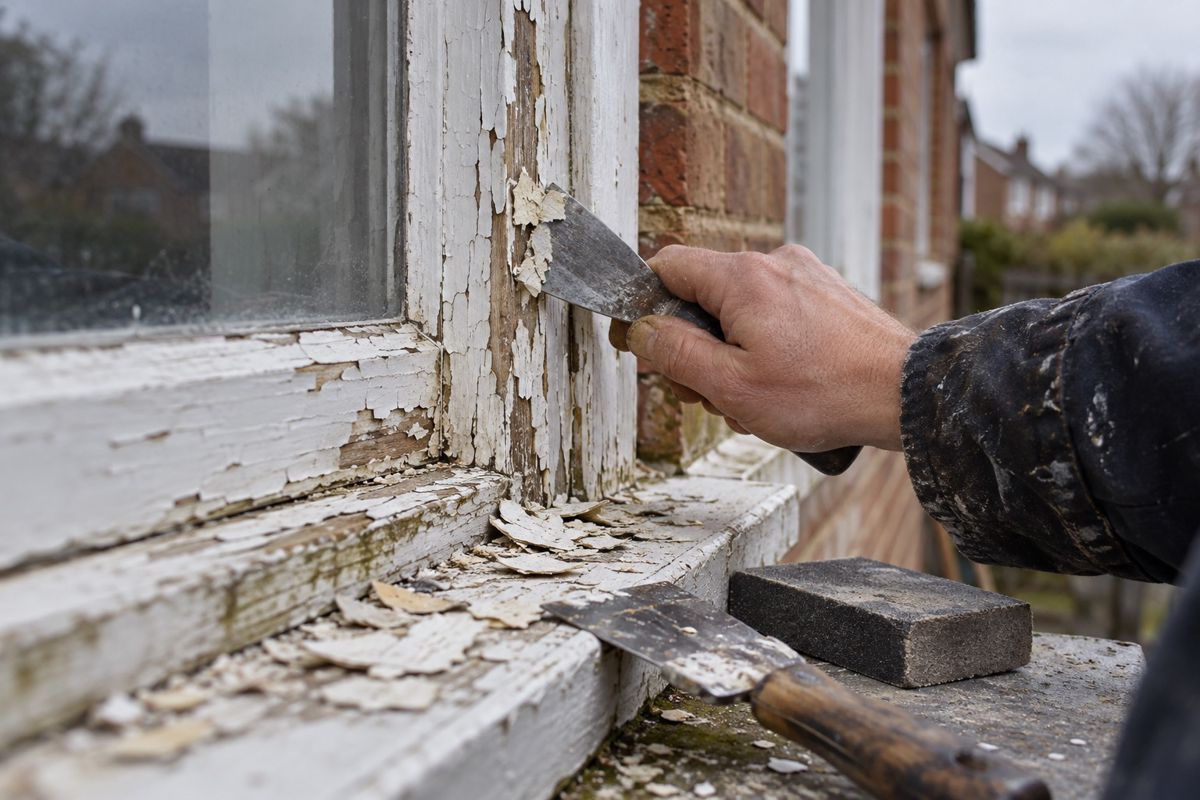
- Condition of the surfaces. Flaking paint, algae, cracked render and rotten timber all need work before painting. Preparation is usually the largest part of a good job.
- Type of surface. Smooth render is quick to paint. Pebbledash, roughcast and rough stone take more paint and more time.
- Amount of woodwork. Windows, doors, fascias and soffits need scraping, sanding, priming and several coats. They often take longer than the walls.
- Paint system. Standard masonry paint, breathable mineral paint and long-life products all cost different amounts.
- Extras. Gutters, downpipes, garage doors, porches, and boundary walls.
When someone offers an unusually low price, check what has been left out. Often it is the preparation.
Why do Swindon houses need different preparation?
Swindon grew quickly, and its housing shows several eras side by side. Each one ages differently and affects what a painter will quote for.
Stone terraces in Old Town and the Railway Village
The railway workers' cottages and many older Old Town buildings are stone. Stone and lime-based mortar need to let moisture out. A hard, sealed masonry paint can trap damp and cause blistering. Breathable paint costs more per litre, but it suits the walls. Many of these streets are conservation areas, and some houses are listed, so check with Swindon Borough Council before changing colours or finishes.
1930s semis and post-war estates
Houses from the 1930s to the 1970s often have render, pebbledash or brick, with timber windows and fascias. Cracked render needs repair before painting, and old timber may need filler or replacement. If the house predates the 1960s, the old paint may contain lead. That should be mentioned to any painter, and old layers should never be dry sanded.
New-build estates
Newer homes around the edges of Swindon often have painted cement board, trims and fascias. They look sound but can need attention sooner than people expect. Preparation is usually lighter, though painted joints and trims still need care.
Do you need scaffolding, and what does it cost?
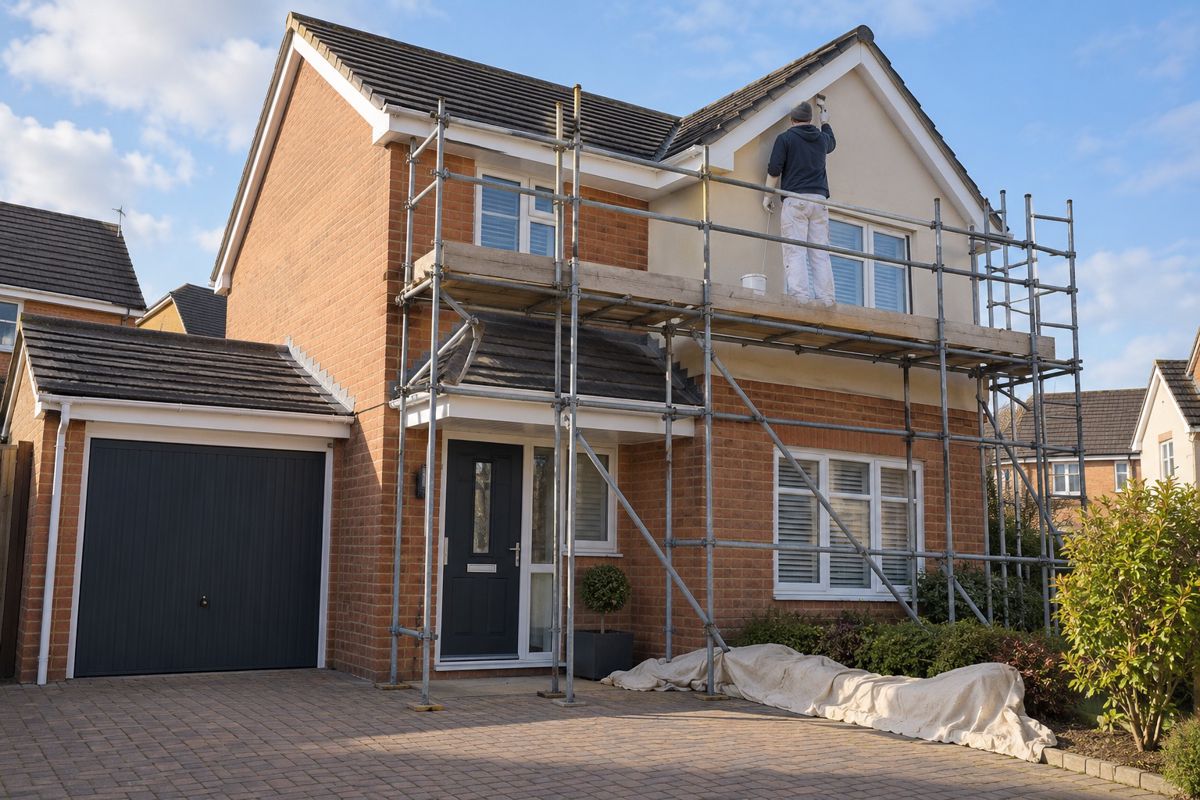
For a two-storey house, scaffolding or a tower is often the safest way to reach gutters, fascias and upper windows. It is usually quoted separately because it is hired from a specialist. As a rough UK guide, a front or full scaffold on a semi can run from a few hundred pounds up to around £1,000 or more, depending on the size of the house and how long it stays up.
Some painters use ladders and a low platform for single-storey work and small areas. That can save money, but it is not suitable for every house. Ask what access method is planned and why. A safe method matters more than a small saving.
How do you compare exterior painting quotes fairly?
A good written quote makes comparison easier. Ask each painter to cover the same points, then check them side by side.
- Which areas are included: walls, windows, doors, fascias, soffits, gutters.
- What preparation is allowed for: washing, scraping, filling, priming.
- The number of coats and the type of paint.
- Access: scaffold, tower or ladders, and who pays for it.
- What happens if extra repairs are found once work starts.
- Insurance. It is reasonable to ask to see proof of public liability cover.
Be careful with a quote that is a single figure with no detail. It tells you little about what will be done.
When is the right time to paint, and what about old paint?
Late spring to early autumn is usually easiest in Swindon. Walls are dry, days are longer and paint cures well. Work can still happen outside those months, but frost, damp and short days make delays more likely. Painting on damp walls is a common cause of peeling, so a good painter will wait rather than rush.
If your home is older and has many layers of paint, mention that when you ask for a quote. Lead can be present in paint from before the 1960s, and sometimes later. This is general guidance, not a test of your house. A test kit or lab test can give you a clearer answer if you are unsure.
What should you do next?
Make a short list of what you want painted, note any cracks, flaking areas or green growth, and take a few photos. Then ask two or three painters to visit and quote in writing. Compare the scope, not just the total.
If you would like to talk through your house, our page on exterior house painting in Swindon explains what the job involves, and you can get in touch from there. For the inside of the house, see interior painting.