
Skip to content
  • Free written quotes
  • Local painters
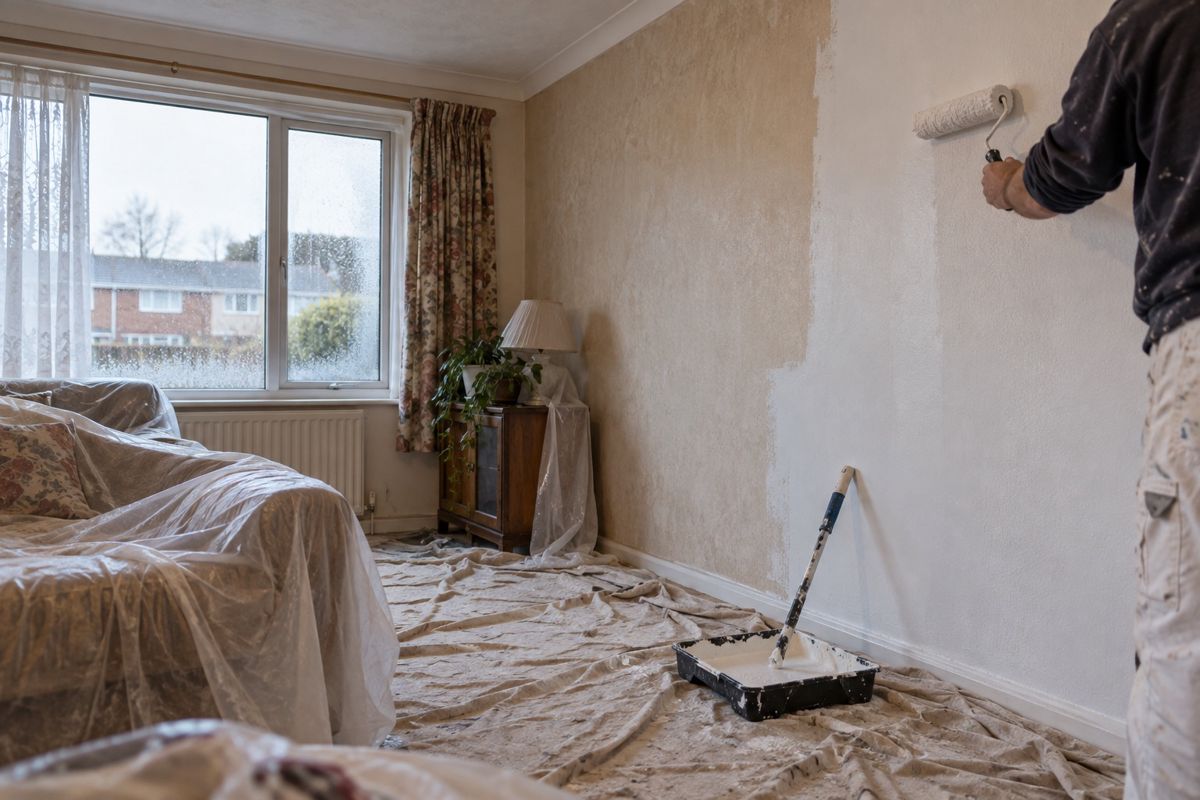
Half-painted living room wall in an estate house with a roller and dust sheets

Interior painting in Swindon

Interior painting in Swindon, from one room to the whole house

Clean edges, properly prepared walls and a tidy finish. Tell us the rooms and the condition and we will explain what is needed.

  • Walls, ceilings, woodwork and doors
  • Damp and mould checked before painting
  • Rooms covered and left tidy

What does interior painting include?

Interior painting covers more than the walls. Most rooms involve ceilings, skirting boards, door frames, doors and sometimes windowsills and radiators too. A full-home repaint may include the staircase, banisters and loft hatch as well.

A typical room goes through these steps:

  1. Move furniture to the centre, then cover it and the floor.
  2. Fill holes and cracks, then sand them smooth.
  3. Mask fittings, sockets and edges.
  4. Prime new plaster, stains and bare patches.
  5. Apply two coats to walls and ceilings, then finish the woodwork.

Good interior painting in Swindon is mainly about what happens before the first coat. Dust, grease and old nail holes show through a fresh finish, so we deal with them at the start.

What about damp, condensation and mould?

Condensation and mould are among the most common reasons people ask for interior painting in Swindon. Damp winters, drying washing indoors and sealed windows all add moisture to the air. It tends to collect on cold external walls, in corners, behind wardrobes and around window reveals.

Painting over mould does not fix it. The cause has to be found first, and that is not always a painter's job. The usual causes are:

  • Condensation from poor ventilation or cold surfaces.
  • Penetrating damp from a leaking gutter, cracked render or failed pointing.
  • Rising damp, which is less common than people think and should be confirmed by a specialist.

Once the cause is dealt with, we clean the mould, let the wall dry and repaint with a suitable product. Anti-mould paints can help in bathrooms and kitchens, but they work best alongside better ventilation.

Is there lead paint in older Swindon homes?

It can be. Lead was widely used in paint before the 1960s and sometimes after, so houses from that period may have it under later layers. That includes Victorian railway terraces, 1930s semis and some post-war homes. You cannot tell from the surface, and many homes have no problem at all.

If your house is older, tell your painter early. Sensible practice is to avoid dry sanding old paint, keep dust down and clean up carefully, especially if children or anyone pregnant live there. A test kit or a lab test can give you a clearer answer if you are concerned. This is general guidance, not a diagnosis for your house.

New-build and later estates are less likely to have the problem, but they have their own: fresh plaster that needs time to dry and thin builder's paint that marks easily.

A written quote is the only reliable way to know. These points affect it most.

  • Number and size of rooms. Ceilings and high stairwells take longer.
  • Surface condition. Cracked plaster, wallpaper to strip and stained ceilings all need extra work.
  • Amount of woodwork. Gloss or satin finishes on doors and skirting boards are slow, careful work.
  • Colour changes. Going from dark to light often needs extra coats.
  • Furniture and access. Rooms that are empty are quicker than rooms full of belongings.
  • Paint choice. Washable, kitchen and bathroom paints cost more than basic emulsion.

We list what is included, so when you compare painters Swindon prices are easier to read side by side.

How long does it take, and when should you call?

One room often takes a day or two, depending on prep and drying times. A whole house takes longer, and we plan it room by room so you can keep living in it. Paint needs time between coats, and winter needs good heating or ventilation so it dries properly.

On the day, the crew arrives, covers floors and furniture, and works through the rooms in order. You will want to open windows and keep pets away from wet paint. We tidy up each day and go through the finished rooms with you at the end.

Call when walls are marked or scuffed, when you have had a leak repaired, before moving in or selling, or when you want a fresh look. For the outside of the house, see exterior painting. To refresh a tired kitchen without replacing it, read about cabinet painting. Or return to the Swindon Painting home page.

How it works

  1. Tell us about the job

    Rooms or exterior, colours and timing.

  2. Visit and written quote

    We measure and price it in writing.

  3. Prep, paint, tidy up

    Floors and furniture protected, clean lines, cleanup.

  • Free written quotes
  • Local painters
  • Careful prep
  • Tidy finish

Step 1 of 3

What needs painting?

Questions about painting in Swindon

Do you move furniture and cover floors?

Yes. Furniture is moved to the middle of the room and covered, and floors are protected with dust sheets. For heavy items, wardrobes full of clothes or delicate pieces, it is best if you clear them beforehand. Tell us in advance about anything fragile, and we will plan around it, so nothing is moved that should not be.

How many coats of paint will my walls need?

Two coats is normal for a good finish. New plaster needs a mist coat first. Dark walls, strong colours and patched areas may need an extra coat to avoid a patchy look. We say in the quote how many coats are allowed for and what that depends on, so there are no surprises on the day.

Can you paint over wallpaper?

Sometimes, but it is often better to strip it. Painted-over wallpaper can lift at the seams, bubble or show the pattern through. If it is old, thick or poorly stuck, stripping is safer. If the paper is sound and smooth, lining it may work. We look at it before quoting and explain which route we would choose and why.

Is it safe to sleep in a room after painting?

Modern water-based paints have low odour and dry quickly, so most people can use the room again soon after, with windows open. Gloss and solvent-based products smell stronger and need more ventilation. If you have asthma, a baby or other health concerns, tell us so we can choose lower-odour products and plan the work accordingly.

Can you repaint after a damp problem?

Yes, once the cause has been fixed and the wall has dried out. Painting too early traps moisture and the paint will fail again. We can clean off surface mould, seal stains and use a suitable paint afterwards. If the damp looks like it needs specialist investigation, we will say so rather than cover it up.

Do you paint ceilings and woodwork?

Yes. Ceilings, skirting boards, door frames, doors and staircases are all part of interior painting. They are listed separately in the quote because they take different products and more time than walls. If you only want the walls done, tell us. We will price it that way and note anything we recommend adding.

Ready when you are. Call now or request a quote online.