
Skip to content
  • Free written quotes
  • Local painters
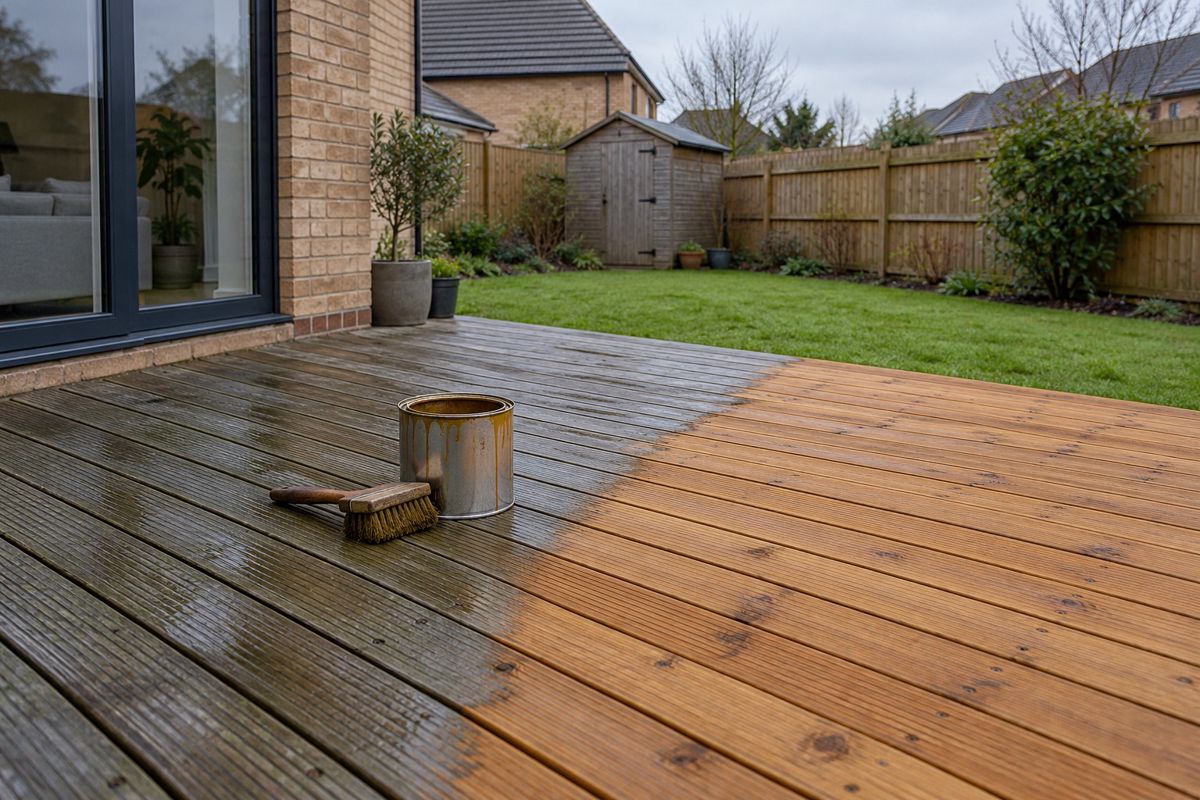
Garden decking half stained in warm oak and half still weathered grey

Deck staining in Swindon

Deck staining in Swindon for decks that take a soaking

Clean, sand and protect garden decking so it copes with rain and shade. Describe your deck and we will explain what it needs.

  • Cleaning and preparation first
  • Stains, oils and sealers explained
  • Decking, steps and garden timber

Step 1 of 3

What needs painting?

What does deck staining and wood sealing involve?

Deck staining protects garden timber from rain, sun and algae while keeping the grain visible. Wood sealing is a close cousin. It soaks into the timber and slows water uptake, which reduces swelling, cracking and rot.

On a typical job we:

  1. Clear furniture and plants, and check boards and fixings.
  2. Clean the timber to remove dirt, algae and old weathered fibres.
  3. Let it dry fully, which can take days in damp weather.
  4. Sand rough or raised areas, and replace or tighten damaged boards where agreed.
  5. Apply stain or sealer, in thin coats, working with the grain.

Deck staining in Swindon is often combined with steps, handrails, pergolas, fence panels and sheds, so mention those when you ask about wood sealing.

Why do Swindon decks need more care?

Swindon is not especially wet by UK standards, but winters are long, damp and often grey. Decks that stay damp go slippery with algae and then start to rot. In much of the area the ground is heavy and slow to drain, and many gardens are shaded by fences, hedges and neighbouring houses.

  • Shaded decks stay wet longer and grow green growth faster.
  • Low decks with poor airflow underneath hold moisture in the boards.
  • New decking often looks fine but needs time to dry out and weather before it takes a stain well.
  • Grey, weathered decking can be cleaned and restored if the timber is still sound.

Many newer Swindon estates have small patio-style decks and raised areas that were built quickly. Older gardens, such as those on 1930s and post-war estates, often have decks that have been left for many seasons. Both can respond well to a proper clean and a new finish.

Which finish is right: stain, oil or paint?

There is no single right answer. The best finish depends on the timber, how much sun it gets and how you use the deck.

  • Decking stain. Adds colour and some protection. It sits in or on the surface and needs refreshing from time to time.
  • Decking oil. Soaks in and keeps the timber looking natural. Usually easy to reapply, with no peeling.
  • Decking paint. Gives the strongest colour and can improve grip when sand-textured. It can peel if the surface was not prepared well.
  • Clear sealer. Protects with little change in appearance, though it can fade quicker in strong sun.

Hardwood decks, softwood decks and pressure-treated timber all behave differently, so tell us what yours is made of if you know. We recommend a product after we have seen the boards.

Price depends on the work, not just the size. The main factors are:

  • Area of decking and the number of steps, rails and balusters, which take much longer than flat boards.
  • Condition. Heavy algae, old peeling coatings and rough boards need more preparation.
  • Finish chosen. Premium oils and stains cost more than basic ones.
  • Access. Raised decks, narrow gardens and awkward side passages slow the work.
  • Repairs. Replacing boards or tightening fixings is extra.
  • Extra timber such as pergolas and fences.

We quote in writing, including what the preparation covers. It is worth comparing what each quote does about cleaning, because that is often the difference between a finish that lasts and one that does not.

How long does it take, and when should you call?

Most decks take a couple of days of work spread over a longer period, because the timber must be dry before staining and each coat needs time to cure. Rain can delay things, and dry spells from late spring to early autumn are the easiest. Keep the deck clear of furniture, pets and foot traffic until the finish is dry.

Call when boards are grey, slippery, patchy or starting to split, or when water no longer beads on the surface. Look out for soft spots, loose boards or rusty fixings, since those need repair before any finish goes on.

If your deck is part of a bigger refresh, see our exterior house painting page, or read about commercial painting for pub gardens and other business premises. You can also return to the Swindon Painting home page.

How it works

  1. Tell us about the job

    Rooms or exterior, colours and timing.

  2. Visit and written quote

    We measure and price it in writing.

  3. Prep, paint, tidy up

    Floors and furniture protected, clean lines, cleanup.

  • Free written quotes
  • Local painters
  • Careful prep
  • Tidy finish

Step 1 of 3

What needs painting?

Questions about painting in Swindon

When should I stain a new deck?

New timber needs time to dry and weather before it will take a stain evenly. Treated softwood often holds moisture, so waiting some weeks to months is common advice, and the exact time depends on the timber. A simple check is to sprinkle water on the boards. If it soaks in, the timber is ready. If it beads, wait longer.

How often does decking need restaining?

It depends on the product, how much sun and rain the deck gets, and how much it is used. Many decks need a fresh coat every year or two, with shaded or well-used ones needing it sooner. Maintenance coats are quicker than starting again, so it is worth refreshing before the old finish has failed completely.

Can a grey, weathered deck be restored?

Often yes. Cleaning removes dirt and loose grey fibres and can bring the timber back to a lighter tone. If the boards are still firm and the fixings are sound, a new stain or oil can protect them again. Rotten or badly split boards are better replaced. We check the timber before quoting and say which it is.

Do you pressure wash the deck?

Sometimes, but not always. Strong pressure can damage soft timber and raise the grain, so we may use a gentler wash and a brush with a decking cleaner instead. The method depends on the age and type of wood. We explain the approach in the quote, and the deck is given time to dry afterwards.

Is deck stain slippery when wet?

Some finishes can be, especially glossy paints and heavy coats. Algae on bare boards is often the bigger risk. Matt oils and stains with added grip are options for steps and shaded areas. Tell us if the deck is used by children or older relatives, and we will suggest a finish that suits.

Can you stain fences, sheds and pergolas too?

Yes, wood sealing is not limited to decks. Fences, sheds, gates and pergolas are common add-ons. Doing them in the same visit saves setting up twice, but each surface may need a different product. Mention them when you ask for a quote and we will include them in the same written price.

Ready when you are

Call now or request a quote online.

01632 960660