
Skip to content
  • Free written quotes
  • Local painters
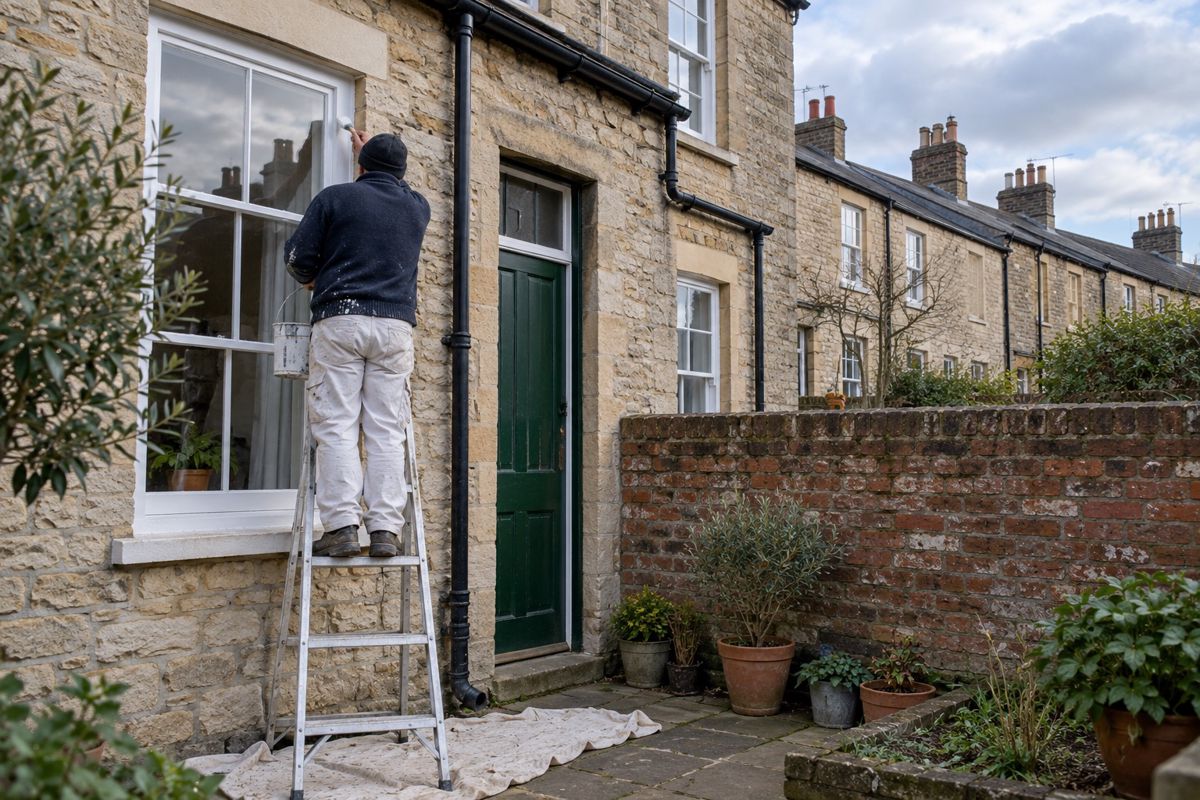
Painter brushing a sash window frame on a stone Victorian terrace

Exterior painting in Swindon

Exterior house painting in Swindon, prepared for wet winters

Walls, windows, fascias and doors, done in the right order. Tell us about your house and we will explain the options.

  • Render, brick, stone and timber
  • Preparation set out in the quote
  • Tidy working around your garden

What does exterior house painting involve?

Exterior house painting is mostly preparation, with the paint going on at the end. A typical job covers masonry walls, window and door frames, fascias and soffits, the front door and often gutters and downpipes.

The usual order of work is:

  1. Wash the surfaces to remove dirt, algae and loose material.
  2. Scrape back flaking paint and sand rough edges.
  3. Repair small cracks and holes, and treat or replace timber that has gone soft.
  4. Prime bare patches and repairs.
  5. Apply the finishing coats, normally two on walls, with a careful finish on the woodwork.

Skipping the early steps is the main reason paint peels within a couple of seasons. When you compare quotes for exterior house painting in Swindon, look at how much of the price covers preparation, not only the paint itself.

What problems are common on Swindon houses?

Swindon has a mix of housing that ages in different ways, and the weather is mild but wet for much of the year.

  • Cracked or blown render. Common on 1930s and post-war houses. Water gets behind the render and pushes it away from the wall, so it should be repaired before repainting.
  • Tired timber windows and fascias. Many 1960s and 1970s estates still have original timber that has been painted many times. Cracked paint lets rain in.
  • Stone and brick that needs to breathe. Old Town and Railway Village homes were built with lime-based materials. Modern, sealed masonry paint can trap moisture, so the paint choice matters.
  • Green algae on shaded walls. North-facing and tree-covered sides need a proper clean and treatment first.
  • Early wear on new-build estates. Painted cement board, trims and fascias can need attention sooner than people expect.

Many Railway Village streets and parts of Old Town are conservation areas, and some houses are listed. Check with Swindon Borough Council before changing colours or materials on a protected building.

What changes the price of exterior painting?

There is no fair single figure for exterior painting, because houses differ so much. These are the things that move the price most.

  • Size and height. A three-bed semi is a different job from a detached house with a gable end.
  • Access. Scaffold, a tower or ladders may be needed. Scaffold is often a separate cost.
  • Condition. Failed render, rotten timber and layers of old paint all add preparation time.
  • Amount of woodwork. Windows and fascias take longer per square metre than flat walls.
  • Paint system. Breathable, masonry and long-life products cost different amounts.
  • Extras. Gutters, garage doors, porches and boundary walls.

We quote in writing and list what is included, so two quotes are easier to compare. If something extra turns up, such as hidden rot behind a board, we explain it before carrying on.

A small house may take several days, a larger one more, and the weather has the final say. Exterior paint needs dry surfaces and reasonable temperatures, so a wet week in a Swindon autumn can push work back. We would rather wait than apply paint into damp.

On the first day the crew usually sets up access, covers plants, paths and windows, and starts washing and scraping. Expect noise and some mess while the old paint comes off. Later days are quieter, with priming, filling and the coats of paint going on.

Tell us about pets, children, parked cars and bins, as these affect how we work. Windows and doors may need to be closed at times while paint dries. At the end we go round the house with you and note anything that needs another look.

When should you call a painter?

Call when you see peeling paint, bare or soft timber, cracks in render, green growth on the walls or stains running down from gutters. Fixing these early is cheaper than repairing the damage later.

If your house was built before the 1960s, the old paint may contain lead. This cannot be judged by eye. It does not mean you cannot repaint, but the old layers should not be dry sanded or burnt off. Mention the age of the house when you get in touch, so the method can be planned properly.

If the outside needs doing and the inside is next, see our interior painting page. For a garden deck or fence, see deck staining, or go back to the Swindon Painting home page for the other services.

How it works

  1. Tell us about the job

    Rooms or exterior, colours and timing.

  2. Visit and written quote

    We measure and price it in writing.

  3. Prep, paint, tidy up

    Floors and furniture protected, clean lines, cleanup.

  • Free written quotes
  • Local painters
  • Careful prep
  • Tidy finish

Step 1 of 3

What needs painting?

Questions about painting in Swindon

What is the best time of year to paint a house exterior in Swindon?

Late spring to early autumn is usually easiest, when walls are dry and temperatures are steady. Work is still possible outside those months on dry, mild days. Cold nights, frost and damp walls stop paint from curing properly, so we may pause or reschedule if the weather turns. It is worth booking early in the year if you want a summer slot.

How long does exterior paint last?

It depends on the surface, the product and how well the preparation was done. Walls that face the weather and timber that moves with the seasons wear faster than sheltered masonry. A good job will often last for several years before touching up is needed. We explain what to expect for your house, rather than quoting one number for everything.

Do you need to use scaffolding?

For a single storey, a low platform or ladders may be enough. For two storeys, gable ends and high fascias, scaffold or a tower is usually safer and gives a better finish. It is often priced separately because it is hired from a specialist. We say in the quote whether we think you need it and why.

Can you paint pebbledash or roughcast?

Yes, with the right masonry paint and a brush or roller suited to the texture. The wall must be clean and sound first, so loose pieces are removed and cracks filled. Pebbledash holds dirt and algae, so washing and treatment matter. It also uses more paint than smooth render, which is reflected in the quote.

Will you paint my windows and doors as well?

We can, and it is usually sensible to do them in the same visit because the scaffold or access is already in place. Timber needs scraping, sanding and the right primer. uPVC is different and often needs a specialist paint, or may be better left alone. Tell us what your frames are made of and we will advise.

Do I need permission to repaint my house?

For most homes, repainting in a similar colour needs no permission. A listed building or a house in a conservation area can be different, and Swindon Borough Council can tell you what applies. Leasehold and some managed estates have their own rules about colours too. It is worth checking before you choose a new colour scheme.

Ready when you are

Call now or request a quote online.

01632 960660